
Celluloid und Bakelit
From the invention of the first plastics to the famous ladies’ legs – LADY LEGS, also known as ‘Can-Can’.
- Patent 1894 · Steinfeld & Reimer, Solingen
- 2 sizes: 4.5 cm and 6.5 cm
- 34 known markings
- More than 25 categories of variants
The first part tells the story of celluloid – patented by the Hyatt brothers in 1870, originally as a substitute for ivory in billiard balls – and of Bakelite, the first fully synthetic plastic, which Leo Hendrik Baekeland filed for in 1907.
At the centre are the ladies’ legs: on 1 January 1894 the firm of Steinfeld & Reimer in Solingen had them protected under patent number 21718. Ernst Reimer had run his own knife factory on Burgstrasse in Solingen since 1880; in 1894 he founded the joint firm with E. Steinfeld, which he owned outright from 1898. After the patent expired, other manufacturers copied the legs too; they were produced until the 1920s, in two sizes: 4.5 and 6.5 cm.
The book documents 34 known markings and arranges the variants into more than 25 categories – by size, colours and number of stripes. Also featured: horses’ hooves, the ‘Kissing Couple’ by Carl Bewer (1898), mermaids by Graef & Schmidt, alligators and shoes.
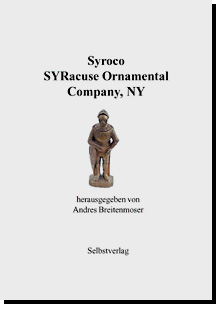 Syroco
 Anri
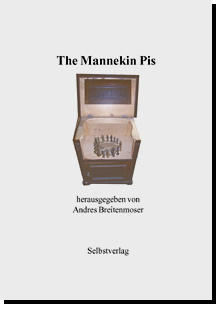 The Mannekin Pis
 Old Snifter
 Pot Metal Animals
 Aldo Colombo
 Carlo Gemelli